How Centrifugal Monoblock Pumps Work for Efficient Water Transfer
Centrifugal monoblock pumps are widely used for water transfer, pressure boosting, irrigation, industrial circulation, and general utility applications. Their compact design, easy installation, and efficient operation make them suitable for homes, farms, factories, commercial buildings, and many other water-handling systems.
Lotus International provides centrifugal monoblock pumps for different flow and pressure requirements. The right pump can help improve water movement, reduce operating problems, and provide dependable performance for regular applications.
What Is a Centrifugal Monoblock Pump
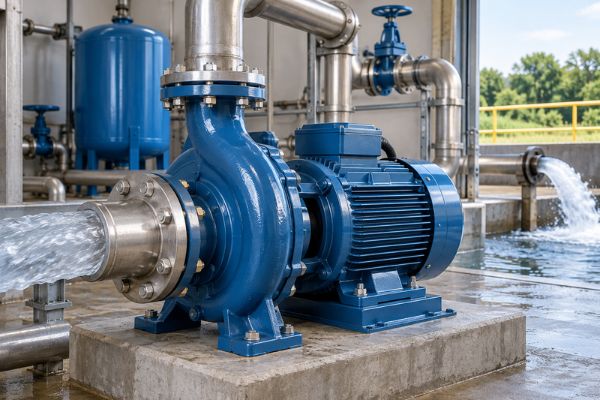
A centrifugal monoblock pump combines the pump and electric motor in one compact unit.
Unlike systems that use separate pump and motor assemblies, a monoblock pump has fewer alignment requirements because the motor and pump are directly connected.
The pump works by using a rotating impeller to create centrifugal force. Water enters through the suction side and is pushed outward by the impeller before moving through the delivery pipe.
This simple working principle makes centrifugal monoblock pumps suitable for many water-transfer applications.
- Hot-water circulation
- HVAC systems
- Heating systems
- Cooling water systems
- Boilers
- Heat exchangers
- Commercial buildings
- Hotels and hospitals
- Industrial utility systems
- Closed-loop water networks
Why Centrifugal Monoblock Pumps Are Popular
Centrifugal monoblock pumps are commonly selected because they offer several practical advantages.
Key benefits include:
- Compact construction
- Easy installation
- Smooth operation
- Low maintenance
- Efficient water transfer
- Simple motor and pump arrangement
- Suitable for continuous operation
- Wide range of applications
- Easy replacement and servicing
Their compact structure also helps save installation space.
Applications of Centrifugal Monoblock Pumps
A centrifugal monoblock pump can be used in many areas.
Residential Applications
These pumps are commonly used for:
- Overhead tank filling
- Underground tank transfer
- Garden watering
- Household water circulation
- Pressure boosting
- General domestic water supply
Agricultural Applications
Farmers may use centrifugal monoblock pumps for:
- Irrigation
- Water transfer
- Sprinkler systems
- Small agricultural pipelines
- Farm water supply
- Tank filling
Industrial Applications
Industries may use monoblock pumps for:
- Process water transfer
- Cooling water circulation
- Utility water systems
- Machine water supply
- Cleaning systems
- Tank transfer
- General plant water movement
Commercial Applications
Commercial buildings may use these pumps in:
- Hotels
- Hospitals
- Schools
- Offices
- Shopping complexes
- Workshops
- Warehouses
How a Centrifugal Monoblock Pump Works
The working process is simple.
- Water enters through the suction pipe.
- The motor rotates the pump impeller.
- The impeller increases the water velocity.
- Centrifugal force pushes the water outward.
- The pump casing converts part of this velocity into pressure.
- Water moves through the delivery pipe.
For proper performance, the suction line should be correctly designed and air leakage should be avoided.
Main Components of a Centrifugal Monoblock Pump
A typical centrifugal monoblock pump includes:
- Electric motor
- Impeller
- Pump casing
- Shaft
- Bearings
- Mechanical seal
- Suction inlet
- Delivery outlet
The exact design may vary according to model, capacity, and application.
How to Select the Right Centrifugal Monoblock Pump
Selecting the correct pump is important for performance and energy efficiency.
Check the Required Flow Rate
Flow rate tells you how much water needs to be moved within a certain time.
A house may need a lower flow than an industrial process or irrigation system.
Calculate Total Head
Total head includes the vertical height and resistance in the pipeline.
It may depend on:
- Suction height
- Delivery height
- Pipe length
- Pipe diameter
- Number of bends
- Valves and fittings
Check the Water Source
The source may be:
- Underground tank
- Storage tank
- Open well
- Reservoir
- Process tank
- Water sump
Consider Pump Usage
Decide whether the pump will run:
- Occasionally
- Several times a day
- For long hours
- Continuously
Check Motor Power
Motor power should match the required flow and head.
Selecting a motor that is too small can cause poor performance, while an oversized motor may increase cost and energy use.
Centrifugal Monoblock Pump Selection Table
| Selection Factor | What to Check |
| Flow Rate | Required water quantity |
| Head | Total lifting and pressure requirement |
| Suction Condition | Water source and suction height |
| Motor Power | Suitable motor power according to application |
| Pipe Size | Correct suction and delivery pipe size |
| Usage | Domestic, agricultural or industrial application |
| Running Hours | Intermittent or continuous operation |
| Water Quality | Clean water or another suitable compatible liquid |
Common Problems in Centrifugal Monoblock Pumps
Like any mechanical equipment, monoblock pumps may develop issues if they are incorrectly installed or maintained.
Common problems include:
- Pump not delivering water
- Low discharge
- Motor overheating
- Excessive vibration
- Unusual noise
- Water leakage
- Frequent tripping
- Poor suction
Reasons for Low Pump Discharge
Low water flow may occur because of:
- Blocked suction pipe
- Air leakage
- Incorrect pump selection
- Low voltage
- Worn impeller
- Excessive suction height
- Undersized pipes
- Closed or partially closed valve
Checking these factors can help identify the actual cause.
Maintenance Tips for Centrifugal Monoblock Pumps
Regular maintenance helps improve pump performance.
Follow these basic steps:
- Keep the pump area clean
- Check for leakage
- Inspect electrical connections
- Check motor temperature
- Avoid dry running
- Keep suction pipes airtight
- Inspect unusual vibration
- Clean blocked lines
- Check bearings periodically
- Follow the manufacturer’s maintenance recommendations
Conclusion
Centrifugal monoblock pumps are practical solutions for water transfer in homes, farms, industries, commercial buildings, and utility systems.
Their compact construction, easy installation, and broad application range make them suitable for many water-handling requirements.
The most important step is selecting the correct pump according to flow, head, suction condition, motor power, and operating hours.
Lotus International provides centrifugal monoblock pumps for different domestic, agricultural, commercial, and industrial applications.
Frequently Asked Questions
A centrifugal monoblock pump is a compact pumping unit in which the electric motor and centrifugal pump are directly connected in one assembly.
They are used for domestic water supply, irrigation, tank filling, commercial buildings, industrial water transfer, and utility applications.
Consider required flow rate, total head, suction height, pipe size, motor power, operating hours, and application.
Yes. They can be used for irrigation, sprinklers, water transfer, and other farm water requirements when properly sized.
Yes. Suitable models can be used for cooling water, utility water, process support, tank transfer, and other industrial water applications.
Possible causes include air leakage, blocked pipes, excessive suction height, incorrect pump selection, low voltage, or a worn impeller.
Yes. Lotus International provides centrifugal monoblock pumps for residential, agricultural, commercial, and industrial water transfer applications.