Submersible Pumps Manufacturer: Types, Applications and Selection Guide
Water pumping is an important requirement in homes, apartments, farms, commercial buildings and industries. Whether water needs to be lifted from a borewell, transferred from a tank or supplied for irrigation, selecting the right pump plays an important role in reliable water management.
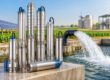
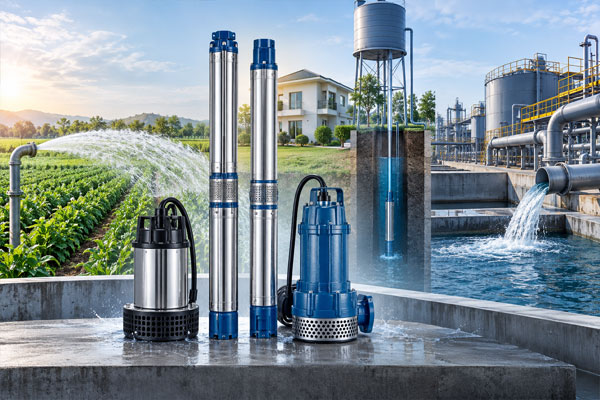
A Submersible Pump is designed to operate while submerged in water. This design makes it suitable for applications where water needs to be lifted from borewells, wells, tanks, sumps and other water sources.
Choosing a reliable Submersible Pumps Manufacturer can help you find the right pump based on water depth, required flow, total head, motor power and operating conditions.
This guide explains the types, working principle, applications, benefits and important factors to consider when selecting a submersible pump.
What Is a Submersible Pump?
A Submersible Pump is a type of water pump designed to operate while fully or partially submerged in the liquid it is pumping, depending on the pump design.
The pump and motor assembly works inside the water source. Instead of pulling water from above, the pump pushes water through the delivery pipe toward the required point.
Submersible pumps are commonly used in:
- Borewells
- Open wells
- Underground tanks
- Sumps
- Residential water supply
- Agricultural irrigation
- Commercial buildings
- Industrial water transfer
- Overhead tank filling
Different submersible pump designs are available depending on the water source and application.
Main Types of Submersible Pumps
There are several types of submersible pumps available for different water pumping requirements.
Openwell Submersible Pumps
Openwell Submersible Pumps are commonly installed in open wells, tanks and suitable water storage systems.
They can be used for:
- Domestic water supply
- Irrigation
- Tank filling
- Garden watering
- Commercial water transfer
- Farm applications
Their submerged operation can provide quiet performance and eliminate many of the suction-related problems associated with surface pumps.
Borewell Submersible Pumps
Borewell Submersible Pumps are designed to lift groundwater from borewells.
They are generally narrow in construction so that they can be installed inside the borewell casing.
Common applications include:
- Residential water supply
- Agricultural irrigation
- Farmhouses
- Commercial buildings
- Industrial water supply
- Groundwater transfer
Pump selection depends heavily on borewell depth, water level, required discharge and total head.
Cast Iron Submersible Pumps
Cast Iron Submersible Pumps provide strong mechanical construction for water pumping applications.
They can be considered for:
- Borewell water lifting
- Tank filling
- Irrigation
- Domestic water supply
- Commercial applications
- Industrial water transfer
The actual suitability should be checked according to water quality and operating conditions.
Stainless Steel Submersible Pumps
Stainless Steel Submersible Pumps provide good corrosion resistance and are commonly considered where clean-water handling and durability are important.
Typical applications include:
- Residential buildings
- Apartments
- Borewells
- Tanks and sumps
- Commercial properties
- Irrigation
- Water supply systems
Stainless steel construction can be particularly useful where corrosion resistance is an important selection factor.
Key Features of Submersible Pumps
Compact Design
Submersible pumps are installed directly inside the water source, which can reduce the need for separate surface pump installation space.
Quiet Operation
Because the pump operates underwater, operating noise can be lower than some surface-mounted pumping arrangements.
Efficient Water Lifting
A properly selected submersible pump can provide effective water delivery from underground sources.
Multiple Head Options
Submersible pumps are available for different pumping depths and head requirements.
Different Construction Materials
Depending on the application, pumps can be available with cast iron, stainless steel and other suitable construction materials.
Single Phase and Three Phase Options
Different motor configurations can be selected according to available electrical supply and pump capacity.
Applications of Submersible Pumps
Submersible pumps are widely used because they can support many water management requirements.
Residential Water Supply
Homes and apartments commonly use submersible pumps to lift groundwater and fill overhead water tanks.
Agricultural Irrigation
Farmers use submersible pumps to supply water for crops, gardens and irrigation networks.
Commercial Buildings
Hotels, offices, educational facilities and commercial complexes may use submersible pumps for water supply and tank-filling applications.
Industrial Water Supply
Industrial facilities can use suitable submersible pumps for utility water, groundwater transfer and storage-tank applications.
Borewell Water Pumping
Deep groundwater extraction is one of the major applications of borewell submersible pumps.
Overhead Tank Filling
Submersible pumps can transfer water from underground sources or tanks to overhead storage tanks.
Benefits of Using a Submersible Pump
No Conventional Priming Requirement
Since the pumping section operates in water, submersible pumps generally avoid the conventional priming process associated with many surface pumps.
Space-Saving Installation
The pump is located inside the water source, reducing the amount of surface installation space required.
Reduced Operating Noise
Underwater installation can help reduce the noise heard around the pumping area.
Suitable for Deep Water Sources
Borewell submersible pumps are specifically designed for applications where groundwater needs to be lifted from significant depths.
Reliable Water Supply
When correctly selected and installed, a submersible pump can provide consistent water supply for domestic, agricultural and commercial applications.
Wide Range of Applications
Different designs make submersible pumps suitable for wells, borewells, tanks, sumps and other water sources.
Openwell Submersible Pump vs Borewell Submersible Pump
Although both operate underwater, they are designed for different installation conditions.
| Factor | Openwell Submersible Pump | Borewell Submersible Pump |
| Installation | Open well or tank | Inside borewell casing |
| Shape | Relatively wider | Long and narrow |
| Main Purpose | Water transfer and supply | Groundwater lifting |
| Typical Application | Open wells, tanks, irrigation | Deep borewells |
| Selection | Flow and head | Bore depth, water level, flow and head |
Choosing between the two depends primarily on the water source and installation conditions.
Why Choose Lotus International for Submersible Pumps?
Lotus International provides a range of pumping solutions for different residential, agricultural, commercial and industrial requirements.
The available submersible pump range includes solutions such as:
- Openwell Submersible Pumps
- Cast Iron Submersible Pumps
- Stainless Steel Submersible Pumps
- Borewell pumping solutions
Pump selection can be made according to water source, required flow, head, motor capacity and operating conditions.
With application-based selection, customers can choose a pump that better matches their actual water pumping requirement instead of selecting only according to HP.
Frequently Asked Questions About Submersible Pumps
A Submersible Pump is designed to operate while submerged in water and is commonly used to lift or transfer water from borewells, wells, tanks and sumps.
Common types include Borewell Submersible Pumps, Openwell Submersible Pumps, Cast Iron Submersible Pumps and Stainless Steel Submersible Pumps.
The correct borewell pump depends on bore diameter, water level, total head, required discharge, pipe size and available electrical supply.
An Openwell Submersible Pump is designed for installation in open wells, tanks and similar water sources. It is commonly used for domestic supply, irrigation and water transfer.
Neither material is automatically better for every application. The correct choice depends on water quality, corrosion conditions, operating requirements, budget and required service life.
HP should be determined from the required flow, total head and pump efficiency. Selecting HP without calculating the actual pumping requirement can result in incorrect pump sizing.
Yes. Submersible pumps are widely used for agricultural irrigation and groundwater pumping. The required capacity depends on water depth, irrigation demand and delivery conditions.
Yes. A properly selected submersible pump can transfer water from a borewell, open well or underground tank to an overhead storage tank.
Continuous operating capability depends on the pump model, motor design, water level, cooling conditions and manufacturer specifications. Always follow the recommended operating conditions.
Lotus International provides submersible pumping solutions in Ahmedabad for residential, agricultural, commercial and industrial water applications.
Conclusion
Choosing the right Submersible Pumps Manufacturer is important when you need dependable water pumping for a borewell, open well, tank, residential building, farm or industrial facility.
The right pump should not be selected only by motor HP. Water depth, required flow, total head, borewell size, water quality, operating hours and power supply should all be considered.
Lotus International provides different submersible pump solutions for applications in Ahmedabad, Gujarat and other regions. By selecting the pump according to actual application requirements, users can achieve reliable water delivery, efficient operation and better long-term pump performance.