How to Select the Right Thermoplastic Centrifugal Pump for Your Industry
Thermoplastic centrifugal pumps are specially designed for handling corrosive, aggressive, and chemically reactive liquids. These pumps are commonly used in industries where normal metal pumps may face rust, corrosion, or chemical damage.
The main advantage of thermoplastic centrifugal pumps is their chemical-resistant construction. Depending on the application, these pumps may be made from materials such as polypropylene, PVDF, CPVC, or other engineered plastics.
They are widely used in chemical processing, electroplating, water treatment, textile processing, pharmaceutical plants, fertilizer units, scrubber systems, and industrial liquid transfer applications.
For any chemical-handling application, proper pump selection is very important. The pump material, seal type, flow rate, pressure, temperature, and chemical concentration must all match the process requirement.
What Are Thermoplastic Centrifugal Pumps?
Thermoplastic centrifugal pumps are centrifugal pumps made from chemical-resistant plastic materials.
Common materials may include:
- Polypropylene
- PVDF
- CPVC
- PVC
- Other engineered thermoplastics
These materials help protect the pump from corrosion when handling aggressive liquids.
The pump works by rotating an impeller. The impeller creates centrifugal force and moves the liquid from the suction side toward the discharge side.
Why Use Thermoplastic Centrifugal Pumps?
Industries choose thermoplastic centrifugal pumps mainly because of their resistance to corrosive liquids.
Important advantages include:
- Good chemical resistance
- Rust-free construction
- Lightweight design
- Easy installation
- Low maintenance
- Smooth liquid transfer
- Suitable for acids and alkalis
- Good performance in corrosive environments
- Long service life when correctly selected
These pumps are especially useful where standard metal pumps are not suitable for the liquid being handled.
Applications of Thermoplastic Centrifugal Pumps
Thermoplastic centrifugal pumps are used in many industries.
Chemical Processing
They can be used for:
- Acid transfer
- Alkali transfer
- Chemical circulation
- Chemical unloading
- Tank transfer
- Process liquid handling
Water Treatment
They are suitable for:
- Water treatment plants
- Effluent treatment plants
- Wastewater transfer
- Neutralization systems
- Chemical dosing support
- Process water circulation
Electroplating Industry
These pumps are used for:
- Plating chemicals
- Acid baths
- Rinse water
- Chemical circulation
- Surface treatment liquids
Textile Industry
Common applications include:
- Dye transfer
- Bleaching solutions
- Washing liquids
- Process chemicals
- Chemical circulation
Pharmaceutical Industry
They may be used for:
- Chemical transfer
- Utility liquids
- Cleaning solutions
- Process support systems
Scrubber Systems
Thermoplastic pumps can be used for:
- Scrubber liquid circulation
- Chemical recirculation
- Pollution control systems
- Fume treatment systems
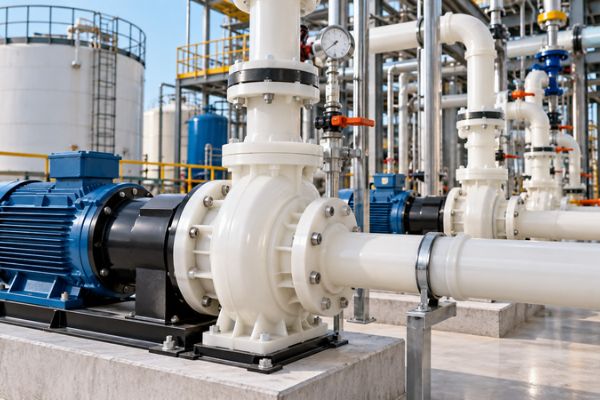
Main Parts of Thermoplastic Centrifugal Pumps
A thermoplastic centrifugal pump usually includes:
- Pump casing
- Impeller
- Shaft
- Electric motor
- Mechanical seal
- Bearings
- Suction inlet
- Delivery outlet
- Thermoplastic body components
The exact design may vary according to the pump model and application.
Benefits of Thermoplastic Centrifugal Pumps
Corrosion Resistance
Thermoplastic materials help resist corrosion from many aggressive liquids.
Lightweight Construction
These pumps are lighter than many metal alternatives, making handling and installation easier.
Low Maintenance
When selected correctly, thermoplastic pumps can reduce maintenance needs in corrosive environments.
Rust-Free Performance
Plastic construction helps avoid rust-related problems.
Easy Installation
The lighter construction can simplify installation and servicing.
Suitable for Chemical Handling
These pumps are designed for applications where chemical resistance is important.
Pump Selection Table
| Parameter | What to Check |
| Liquid Type | Chemical or process liquid |
| Concentration | Strength of chemical |
| Temperature | Operating liquid temperature |
| Flow Rate | Required discharge |
| Total Head | Lifting and pressure requirement |
| Pump Material | PP, PVDF, CPVC or suitable thermoplastic |
| Seal Type | Chemical-compatible seal selection |
| Motor Power | Suitable motor rating according to application |
| Duty Hours | Intermittent or continuous operation |
| Solids | Presence of particles in liquid |
Why Choose Lotus International?
Lotus International provides thermoplastic centrifugal pumps for chemical and industrial liquid handling applications.
Customers can get support for:
- Application-based pump selection
- Chemical handling requirements
- Flow and head selection
- Industrial pump solutions
- Suitable thermoplastic material selection
- Commercial and industrial requirements
Providing complete operating details helps in recommending the right pump.
Conclusion
Thermoplastic centrifugal pumps are a practical solution for transferring corrosive and chemically aggressive liquids.
Their corrosion-resistant construction makes them suitable for chemical processing, ETP plants, water treatment, electroplating, textile processing, scrubber systems, pharmaceutical units, and many other industrial applications.
The right pump should be selected according to chemical compatibility, temperature, flow rate, total head, seal type, and duty conditions.
Lotus International provides thermoplastic centrifugal pumps for different chemical and industrial applications in Ahmedabad, Gujarat, and other locations.
Frequently Asked Questions
It is a centrifugal pump manufactured using chemical-resistant plastic materials for handling corrosive and aggressive liquids.
Common materials include polypropylene, PVDF, CPVC, PVC, and other engineered thermoplastics.
Yes, suitable pumps can handle many acids, depending on the material, acid type, concentration, and temperature.
Yes. They are commonly used for chemical transfer, wastewater handling, neutralization, and recirculation applications.
Yes. Thermoplastic centrifugal pumps are widely used for chemical recirculation in industrial scrubber systems.
Check liquid type, chemical concentration, temperature, required flow, total head, seal type, and operating hours.
Incorrect material selection can cause cracking, swelling, leakage, seal damage, and pump failure.