Finding a way to move water across long distances or up to very high floors requires more than just a standard motor. When your project demands extra force and steady flow, the Multistage Centrifugal Pump is the most reliable tool for the job. These machines are designed to handle high-pressure tasks that simple pumps just cannot manage. At Lotus, we focus on providing these advanced pumping solutions to help industries and large buildings run smoothly every day.
A Centrifugal Pump works by using multiple spinning parts called impellers, Whether you are looking for a Vertical Multistage Pump to save floor space or a heavy-duty Industrial Multistage Pump for a factory, it is important to understand how they work. In this guide, we will explain why these pumps are so special, where they are used, and how you can pick the right one for your specific needs. Using the right technology ensures that your water system stays strong and efficient for many years.
What is a Multistage Centrifugal Pump?
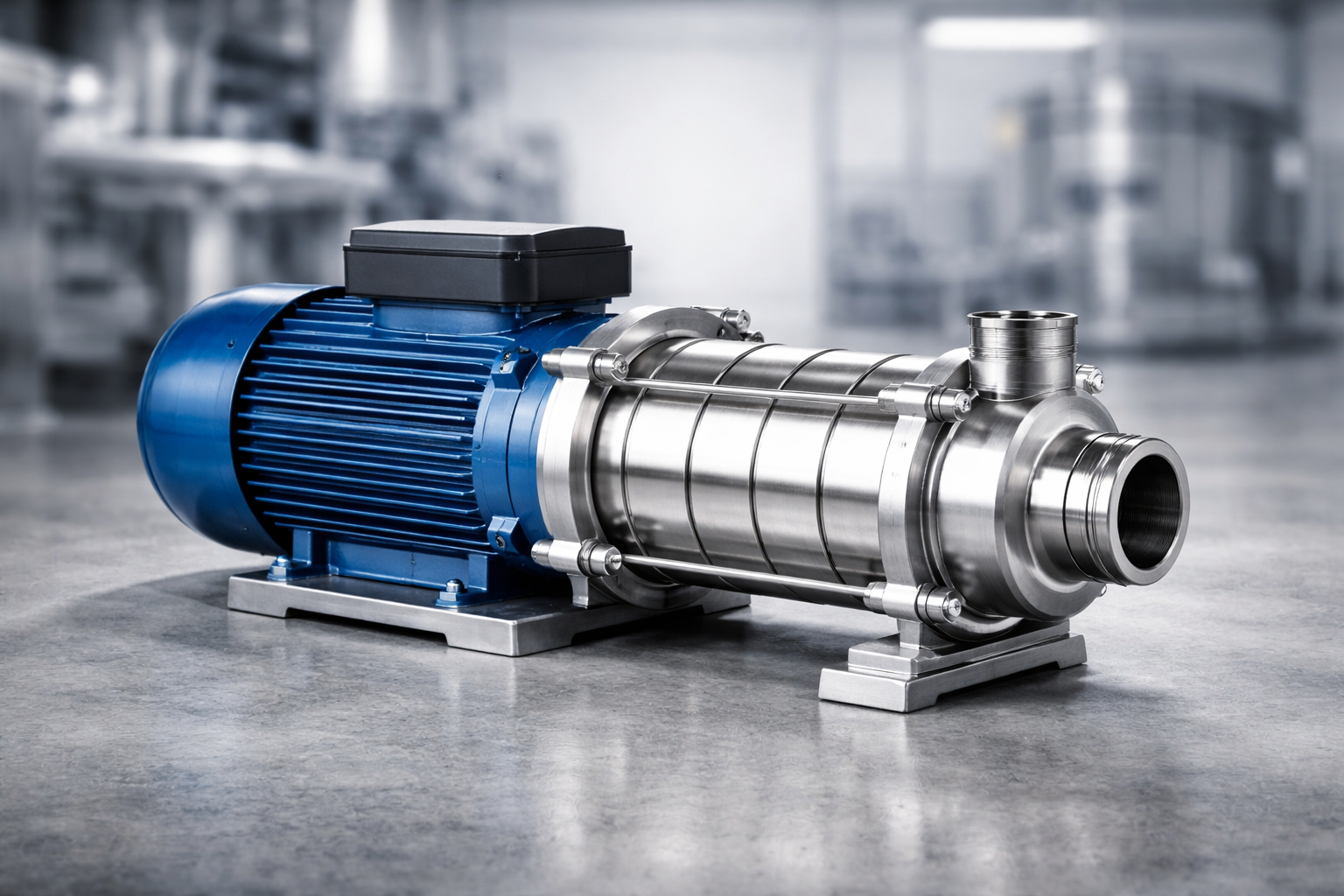
A Multistage Centrifugal Pump is a special type of pump that contains two or more impellers. In a normal pump, there is only one impeller that spins to move water. However, in a multistage version, the impellers are connected in a series. This means the water flows from one stage to the next inside the same machine.
Each stage acts like a booster. Because there are many stages, this machine is often referred to as a High Pressure Centrifugal Pump. These are built to be very tough. They can be designed as horizontal units (lying flat) or as a Vertical Multistage Pump (standing tall). The vertical design is very popular in cities because it provides a lot of power without taking up much room in a basement or utility closet.
How Multistage Pumps Work
The secret to a Multistage Water Pump is how it builds energy. It follows a simple but clever process:
Benefits of Using High Pressure Multistage Pumps
Investing in a High Pressure Centrifugal Pump offers many advantages for both engineers and business owners:
Comparison: Pump Types at a Glance
| Pump Type | Pressure Output | Efficiency | Installation | Best Use |
|---|---|---|---|---|
| Multistage Centrifugal | Very High | High | Flexible (Vertical/Horiz) | Skyscrapers, Boilers, RO Systems |
| Single Stage Pump | Low to Medium | Medium | Easy | Simple water transfer, Gardens |
| Submersible Pump | Medium | High | Difficult (Inside Well) | Deep borewells, Drainage |
How to Select the Right Multistage Centrifugal Pump
Choosing the wrong pump can lead to high energy bills or a system that doesn’t work. Here is what to look for:
Why Choose Lotus Pumps for Multistage Pump Solutions
At Lotus, we are dedicated to high-quality engineering. We know that in an industrial setting, downtime costs money. That is why our Industrial Multistage Pump range is built using the best materials and modern designs.
Our pumps are tested to ensure they meet strict performance standards. We focus on providing an Energy Efficient Pump that reduces your overhead costs while providing the high pressure you need. Whether you are building a new factory or upgrading a Booster Pump System for a residential complex, our team is here to help you find the perfect solution.
FAQ’s on Multistage Centrifugal Pump
What is a multistage centrifugal pump?
It is a pump that uses two or more impellers to move water. Each impeller adds more pressure to the fluid, allowing it to reach much higher heights than a standard pump.
Where are multistage pumps used?
They are used in high-rise buildings, water treatment plants (RO systems), power plant boilers, agricultural irrigation, and industrial cleaning systems.
Why does a multistage pump give high pressure?
It gives high pressure because each “stage” (impeller) acts like an individual pump. As water passes through each stage, the pressure builds up cumulatively, resulting in a very powerful exit force.
What is the difference between a single stage and a multistage pump?
A single-stage pump has one impeller and is best for low-pressure tasks. A multistage pump has multiple impellers and is designed specifically for high-pressure needs.
How do I maintain a multistage pump?
Regularly check the mechanical seals for leaks, listen for bearing noise, ensure the pump is properly lubricated, and never run the pump without water inside (dry running).