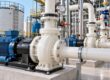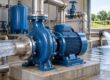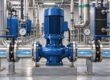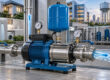
End Suction Pumps for Industrial Use
Industries depend heavily on water and fluids to keep their daily operations running smoothly. However, many plants and factories face common fluid handling problems. Issues like low water transfer speed, poor flow, and high energy costs can slow down production. Often, businesses struggle with frequent pump breakdowns, heavy leakage, and difficult maintenance routines. A major reason for these problems is simply choosing the wrong pump for the job, which causes expensive downtime and wasted energy.
This is where End Suction Pumps step in to save the day. End Suction Pumps help industries get reliable water transfer, stable flow, and better long-term performance. Because of their simple and smart design, these pumps make fluid movement incredibly efficient. They use less electricity, offer easy maintenance, and reduce the chances of sudden breakdowns.
What are End Suction Pumps?
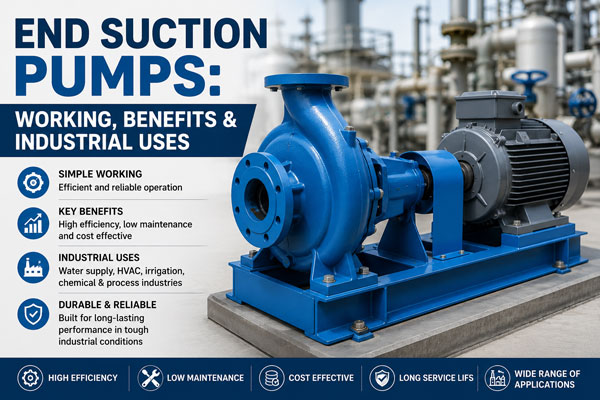
In simple words, End Suction Pumps are a type of single-stage centrifugal pump. This means they use a spinning wheel (called an impeller) to move water. The liquid enters the pump straight through one end (the suction side) and gets pushed out through the top or side (the discharge side).
Because they usually have a single impeller, their design is very simple and compact. They do not take up a lot of space in a pump room. Depending on the material they are made from, these pumps are perfect for pumping clean water and other thin, low-viscosity liquids safely and reliably.
What are End Suction Pumps?
The working process of these pumps is easy to understand. Here are the simple steps:
- Liquid enters the pump from the suction side.
- The impeller (a special wheel with blades) rotates at high speed inside.
- The rotating impeller adds energy and speed to the liquid.
- The liquid moves outward quickly due to centrifugal force (the force that pushes things away from a spinning center).
- The pump casing guides the fast-moving liquid toward the discharge outlet.
- The liquid then moves through the pipeline with the required flow and pressure.
Understanding the Main Roles:
- Impeller: The spinning part that actually pushes the water.
- Casing: The outer shell that holds the water and guides it to the exit.
- Shaft: The metal rod that connects the motor to the impeller, making it spin.
- Motor: The electric engine that provides the power to turn the shaft.
- Mechanical Seal: A special ring that stops water from leaking out of the pump casing.
Main Parts of End Suction Pumps
- Pump casing: The strong outer shell that holds the water and pressure.
- Impeller: The spinning wheel with blades that moves the water.
- Shaft: The solid metal rod that transfers power from the motor to the impeller.
- Mechanical seal: A tight ring that prevents water from leaking along the shaft.
- Bearings: Small metal rollers that keep the shaft spinning smoothly without friction.
- Suction nozzle: The front opening where water enters the pump.
- Discharge nozzle: The top opening where pressurized water exits.
- Motor: The electric engine that drives the whole system.
- Coupling: The connector that safely joins the motor to the pump shaft.
- Base frame: The heavy metal stand that holds both the pump and the motor securely.
- Volute casing: The spiral shape of the casing that helps turn water speed into water pressure.
Key Features of Good End Suction Pumps
Single-stage design: Uses just one impeller for simple and clear operation.
Compact structure: Saves valuable floor space in utility rooms.
High hydraulic efficiency: Moves maximum water with minimum power waste.
Mechanical seal: Reduces water leakage to almost zero.
Easy maintenance access: Designed so you can remove the motor without moving the pipes (back-pull-out design).
Strong pump casing: Made of tough metals to handle high pressure.
Custom impeller size option: Can be adjusted to give the exact flow you need.
Reliable flow performance: Keeps water moving smoothly at all times.
Suitable for indoor and outdoor installation: Built to survive different environments.
Energy-efficient operation: Keeps the factory’s electricity bills low.
End Suction Pumps vs Normal Water Pumps
| Point | Normal Water Pump | End Suction Pumps |
|---|---|---|
| Application | Homes and small gardens | Factories and commercial buildings |
| Industrial Use | Not recommended | Highly recommended |
| Flow Stability | Flow can fluctuate easily | Provides stable and consistent flow |
| Construction | Made with light-duty materials | Made with heavy-duty industrial metals |
| Maintenance | Often replaced instead of repaired | Can be repaired and maintained for long-term use |
| Efficiency | Standard operating efficiency | High hydraulic efficiency |
| Continuous Operation | May overheat during extended operation | Designed for continuous industrial operation |
| Best Use | Domestic daily water supply | Heavy fluid handling and industrial utility applications |
Installation Tips for End Suction Pumps
- Install on a strong, flat concrete foundation to avoid shaking.
- Keep the suction line as short and straight as possible.
- Avoid air leakage in the suction line by sealing joints tightly.
- Use proper pipe size (never use a pipe smaller than the pump nozzle).
- Check alignment between the pump and motor to prevent vibration.
- Install isolation valves correctly so you can remove the pump easily later.
- Keep enough space around the pump for maintenance workers.
- Check motor rotation direction before fully starting it.
- Prime the pump (fill it with water) if it does not pull water automatically.
- Test flow and pressure immediately after installation to ensure it matches the required specs.
Maintenance Tips for End Suction Pumps
- Check for water leakage regularly around the base.
- Inspect the mechanical seal; replace it if it drips continuously.
- Clean the suction strainer so water can flow in without blockage.
- Check bearing noise; a grinding sound means they need replacing.
- Check vibration levels to ensure the pump hasn’t moved out of alignment.
- Check motor temperature to ensure it isn’t overheating.
- Lubricate the bearings strictly as per the manufacturer’s instructions.
- Inspect the impeller condition yearly for wear and tear.
- Check pump alignment every few months.
- Keep the pump area clean and dry for safety.
- Maintain service records in a logbook for future reference.
- Always follow manufacturer instructions for safety and care.
Why Choose Lotus International for End Suction Pumps?
When factories need reliable water movement, they trust experts. Lotus International provides comprehensive industrial pump solutions tailored to your specific needs. We offer high-quality End Suction Pumps suitable for industrial, commercial, municipal, HVAC, irrigation, and utility applications.
Our team provides expert guidance for selecting the right pump based on your required flow, head, pressure, and application. Beyond end suction models, Lotus International offers support for different pump categories like industrial pumps, multistage pumps, fire engine pumps, pressure booster systems, drainage and sewage pumps, and water circulation pumps. We believe in providing honest, practical support for pump buyers to ensure your plant runs efficiently without expensive downtime.
Final Thoughts on End Suction Pumps
Whether you are running a massive cooling tower or transferring water for an entire commercial building, having the right equipment is critical. End Suction Pumps are highly useful for industries that need reliable water transfer, stable flow, simple maintenance, and energy-efficient pumping performance. By choosing the correct capacity and following basic maintenance, these pumps will serve your facility for years. If you need help finding the perfect pump for your project, reach out to Lotus International today for expert advice and reliable solutions.
FAQs
They are simple, single-stage centrifugal pumps where water enters straight through the front suction nozzle and exits through the top discharge nozzle. They use a single spinning impeller to move water quickly.
Water enters the pump, and a high-speed spinning wheel (impeller) pushes the water outward using centrifugal force. The pump casing then guides this fast-moving water into the discharge pipe.
They are used in factories, commercial buildings, agriculture, and municipal water plants. Common applications include HVAC cooling, water transfer, and irrigation.
End Suction Pumps have only one impeller and are best for moving high volumes of water at normal pressure. Multistage pumps have multiple impellers and are used to push water at very high pressure, like in high-rise buildings.
Yes, they are highly suitable. They are the standard choice for circulating chilled water and cooling tower water in large HVAC plants because of their stable flow.
Yes, they are excellent for agricultural irrigation. They can easily transfer large amounts of water from canals or tanks directly to farm fields.
You need to calculate your required water flow rate, the height the water needs to travel (head), the pipe size, and the type of liquid. A pump supplier can help match these details to the right pump.
Common problems include water leakage from broken seals, low flow due to blocked strainers, and loud noises caused by cavitation or bad bearings.
Basic visual checks for leaks and unusual noises should be done weekly. A complete maintenance check, including lubrication and seal inspection, should be done every few months.
Lotus International supplies high-quality End Suction Pumps in Ahmedabad and Gujarat. They offer expert guidance and a wide range of industrial pump solutions.