Fire Engine Pumps in Fire-Fighting Systems
When a fire breaks out, every single second matters. One of the most common fire safety problems is low water pressure. If the water supply is delayed, or the pressure is too weak, the fire-fighting system cannot perform well. A lack of emergency readiness, poor pump selection, and weak system performance put people, property, and expensive machinery at high risk. Relying on normal daily water pressure is never enough during a serious fire emergency.
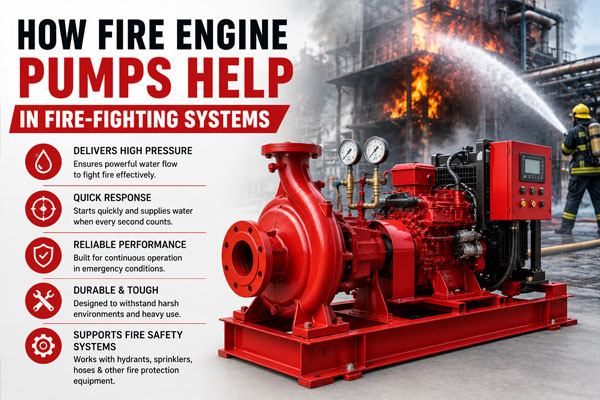
This is exactly where Fire Engine Pumps come to the rescue. Fire Engine Pumps help fire-fighting systems by providing a quick, strong, and reliable water flow right when it is needed most. These specialized high-pressure pumps take water from tanks or municipal lines and force it through fire hoses and sprinklers with incredible power.
What are Fire Engine Pumps?
Fire Engine Pumps are high-pressure pumps specially designed to move water for fire-fighting needs. Unlike normal water pumps that move water slowly for daily use, fire pumps push water fast and hard.
They can be used in mobile fire trucks, fixed fire hydrant systems, industrial fire safety systems, emergency vehicles, and building fire protection setups. Their main job is very simple but important: they provide a strong and steady water flow when normal city water pressure is not enough to fight a fire.
How Fire Engine Pumps Work in a Fire-Fighting System
- Water is taken from a dedicated fire tank, reservoir, hydrant, or water source.
- The pump creates pressure by spinning rapidly when the system detects a drop in pressure.
- Pressurized water moves quickly through the main fire pipes or hoses.
- Water reaches the fire hydrants, automatic sprinklers, or hose nozzles.
- Firefighters use the water to safely and effectively control the fire.
- The system continues to pump water until the fire is out and it is shut off manually.
Why Flow Rate and Pressure Matter: Flow rate determines how much water is pouring onto the fire, while pressure determines how hard and far that water is pushed. Both must be high enough to break through the heat and cool the burning material.
Main Parts of Fire Engine Pumps
- Pump casing: The strong outer shell that holds the water and pressure inside.
- Impeller: The spinning wheel inside that pushes the water outward to create pressure.
- Shaft: The metal rod that connects the motor to the impeller.
- Mechanical seal: Prevents pressurized water from leaking out of the pump.
- Suction line: The pipe that pulls water into the pump from the tank.
- Delivery line: The pipe that pushes pressurized water out to the fire system.
- Motor or engine: The power source (electric or diesel) that spins the pump.
- Control panel: The brain that starts, monitors, and stops the pump system.
- Pressure gauge: The dial that shows how much water pressure is being created.
- Valves: Devices that open and close to control water direction.
- Coupling: Connects the motor to the pump shaft safely.
- Base frame: The heavy metal stand that holds the pump and motor together tightly.
Key Benefits of Fire Engine Pumps
Quick emergency water supply: Starts automatically to deliver water in seconds.
Strong water pressure: Punches through heat and reaches high floors easily.
Better fire hose performance: Gives safety teams the flow they need to work safely.
Support for hydrants and sprinklers: Keeps the whole building’s safety network alive.
Useful for industrial fire safety: Protects large, high-risk factory environments.
Helps reduce fire damage: Fast action means less fire and smoke destruction.
Improves emergency readiness: Provides peace of mind that the building is safe.
Supports fire trucks and fire teams: Gives professionals the tools to win.
Durable design for tough conditions: Built rugged to survive harsh environments.
Better safety for people and property: Ultimately saves lives and investments.
Common Fire Pump Problems and Solutions
| Problem | Impact on Fire Safety | Solution |
|---|---|---|
| Low Pressure | Water may not reach the fire effectively. | Check for impeller wear, pipe blockages, or pressure loss. |
| Air Leakage in Suction Line | The pump may fail to pull water from the source. | Tighten all joints and replace damaged gaskets or seals. |
| Pump Not Starting | The complete fire-fighting system may become unavailable. | Inspect the control panel, electrical supply, wiring, and batteries. |
| Low Water Source Level | The pump may draw air and stop supplying water. | Keep the fire-water tank permanently filled to the required level. |
| Blocked Strainer | Water flow may reduce severely during an emergency. | Inspect and clean the suction strainer regularly. |
| Valve Problem | Water may flow in the wrong direction or become restricted. | Inspect, clean, and service check valves and isolation valves. |
| Motor Overheating | The pump may stop while fire-fighting operations are in progress. | Provide proper ventilation and check motor loading and cooling. |
| Diesel Engine Issue | The backup fire pump may fail to start. | Check fuel quality, fuel filters, oil level, and battery condition. |
| Poor Maintenance | Pump components may rust, seize, or fail unexpectedly. | Follow a strict inspection and monthly maintenance schedule. |
| Wrong Pump Selection | The system may not control a large or rapidly spreading fire. | Recalculate pressure and flow requirements and upgrade the pump. |
| Pressure Fluctuation | Hose streams and sprinkler performance may become unstable. | Inspect the jockey pump, pressure switches, and control settings. |
| No Regular Testing | Hidden pump or control failures may remain unnoticed. | Perform weekly manual and automatic start tests. |
How Fire Engine Pumps Improve Emergency Response Time
Time is the biggest enemy in a fire. Fire Engine Pumps improve response time by providing a ready water supply the exact second a pressure drop is detected. There is no waiting for municipal water trucks to arrive.
Because they create fast pressure build-up, firefighters can achieve quick hose operation immediately upon arriving. This means much less delay in firefighting. Better support for emergency teams leads to a faster control of fire spread, which ultimately results in heavily reduced property damage and safer rescues.
How Fire Engine Pumps Help Protect People and Property
At their core, Fire Engine Pumps are life-safety devices. A strong, immediate spray of water from a sprinkler cools the air and clears smoke, which actively supports evacuation safety. It helps control fire spread by trapping the flames in one room.
By putting the fire out fast, the pump reduces damage to expensive machines and finished goods. It protects the structural steel of the building from melting. Having a reliable pump supports your total fire safety planning and gives building owners, workers, and residents better emergency confidence.
Fire Engine Pumps Maintenance Tips
- Test pump regularly: Run the pump weekly to ensure it is always ready.
- Check water source level: Never let the fire water tank drop below required levels.
- Clean strainer: Remove dirt from the suction strainer so water flows freely.
- Check suction and delivery lines: Look for rust or slow drips.
- Check pressure gauge: Ensure needles are steady, not bouncing.
- Inspect valves: Open and close valves slightly to ensure they aren’t stuck.
- Check motor or engine: Look for signs of burning smells or unusual heat.
- Check fuel level for diesel pump: Keep the tank full with fresh diesel.
- Check electrical panel: Look for loose wires or tripped warning lights.
- Lubricate moving parts as per instructions: Grease the bearings to prevent friction.
- Keep pump area clean: Do not store boxes or junk in the pump room.
- Maintain service records: Write down every test and repair in a logbook.
- Train operators: Ensure security guards know what the panel alarms mean.
Fire Engine Pumps Testing Checklist
- Start pump manually: Ensure the green button works instantly.
- Check automatic start if available: Drop the line pressure and watch the pump turn on itself.
- Check pressure reading: Verify it hits the required high pressure mark.
- Check flow output: Ensure water is moving powerfully through the test line.
- Check vibration: The pump should run smoothly, without shaking violently.
- Check abnormal sound: Listen for grinding or rattling noises inside the casing.
- Check leakage: Inspect the mechanical seal and pipe joints for water drips.
- Check motor load: Use an amp meter to ensure the electric motor isn’t struggling.
- Check diesel engine performance: Look for clean exhaust smoke and steady RPMs.
- Check valve operation: Ensure water stops completely when valves are shut.
- Check emergency readiness: Leave the panel in “AUTO” mode when leaving the room.
Why Choose Lotus International for Fire Engine Pumps?
When building a fire safety system, the quality of your equipment is a matter of life and death. Lotus International provides dedicated fire engine pumps and complete industrial pump solutions for critical environments. We support industrial, commercial, and emergency fire-fighting requirements with high-quality, durable systems.
Lotus International delivers pump solutions specifically for safety-focused applications. Our team provides expert guidance for choosing the right pump based on your exact site needs, water source, and building height. Beyond fire pumps, we also provide support for different pump categories like industrial, drainage, booster, and water circulation pumps. We offer practical assistance for your fire-fighting water supply needs, ensuring your facility remains protected, compliant, and ready for any emergency.
Final Thoughts on Fire Engine Pumps
Building safety is incomplete without reliable Fire Engine Pumps. They are the most important part of active fire-fighting systems because they provide the critical water pressure, fast flow, and system reliability needed to handle emergencies. Whether you run a factory, manage a hospital, or construct high-rise buildings, investing in the right fire pump protects your people and your property. If you need help choosing the exact pump size and capacity for your safety system, reach out to Lotus International for professional, expert support.
FAQs
Fire Engine Pumps are specialized, high-pressure pumps designed to move large volumes of water quickly. They are used exclusively during fire emergencies to supply water to fire hoses, hydrants, and sprinkler systems.
They help by taking water from a tank and pushing it out with intense pressure. This strong flow ensures firefighters and automatic sprinklers have enough water power to quickly stop the fire.
They are used in factories, warehouses, commercial buildings, hospitals, schools, and high-rise apartments. They are also mounted on mobile fire trucks and emergency vehicles.
Normal pumps move water slowly for daily use, while Fire Engine Pumps are built for extreme emergencies. Fire pumps generate much higher pressure and are built from heavy-duty materials to ensure maximum reliability.
Usually, large electric or diesel Fire Engine Pumps are used as the main pump for hydrant systems. A smaller jockey pump is also used alongside them to maintain the pipe pressure.
Pressure dictates how far and how high the water can reach. Without high pressure, water cannot reach the top floors of a building or punch through the intense heat of a fire.
You should choose based on your building’s required flow rate, necessary pressure (head), and water source. Consulting a fire safety engineer or a trusted supplier is highly recommended.
Fire Engine Pumps should ideally be tested once a week. Regular testing ensures the engine starts smoothly, the pressure is correct, and there are no hidden leaks.
Common problems include low water pressure, air leaks in suction lines, dead batteries on diesel engines, blocked strainers, and a lack of regular maintenance causing parts to seize.
Lotus International is a trusted supplier of reliable Fire Engine Pumps and industrial pump solutions. They provide expert guidance and durable pumps for commercial and industrial fire safety systems.