In industrial and commercial operations, efficient water transfer systems play an important role in maintaining smooth workflow and operational reliability. From agriculture and manufacturing units to construction sites and commercial buildings, industries require pumps that can deliver consistent performance with minimal maintenance. This is where Self Priming Monoblock Pumps become a reliable solution.
These pumps are designed for quick priming, efficient water handling, and continuous performance. Their compact structure and user-friendly operation make them suitable for a wide range of industrial and domestic applications. Choosing the right pump not only improves efficiency but also reduces downtime and maintenance costs.
Understanding the Role of Self Priming Monoblock Pumps
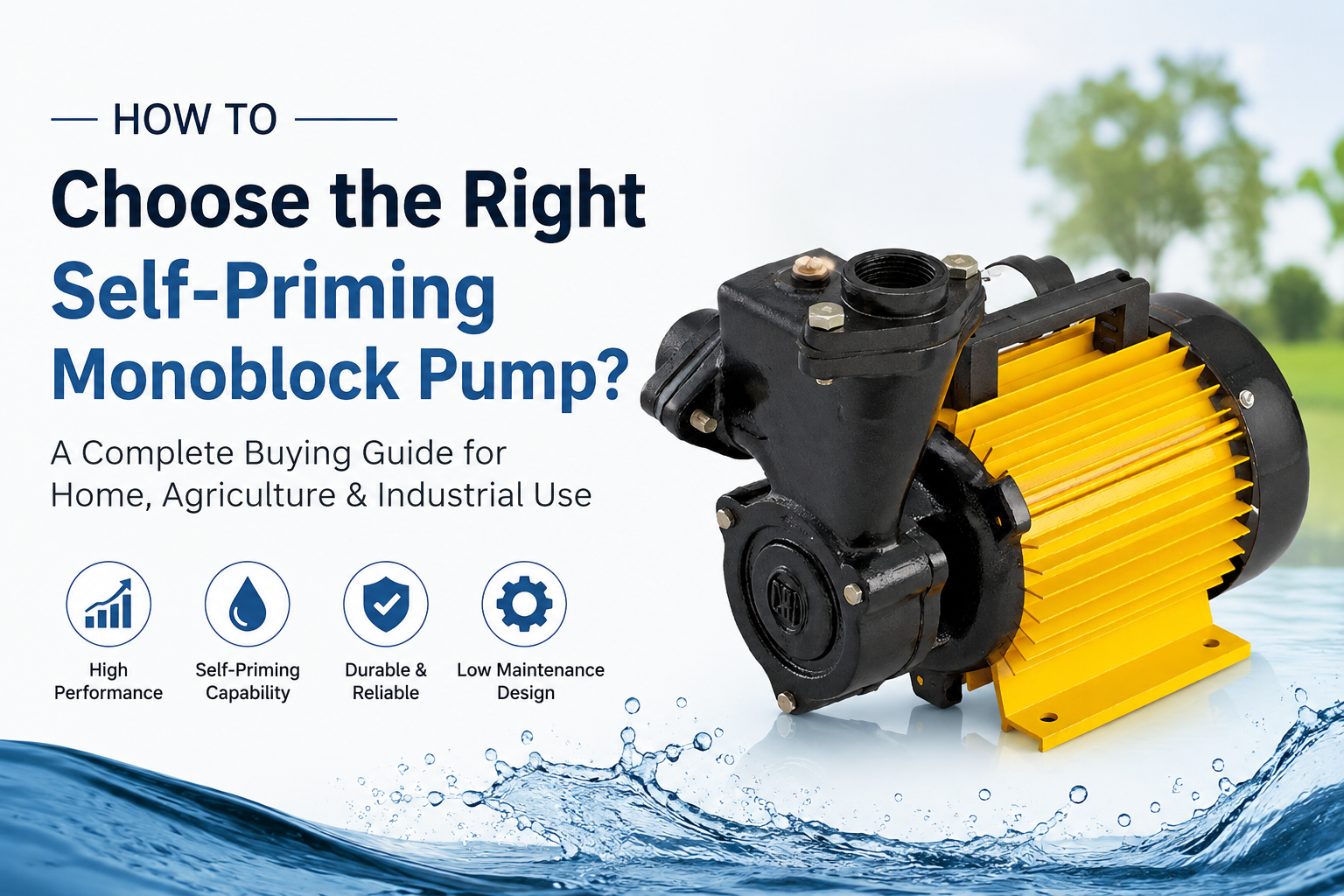
Self Priming Monoblock Pumps are specially designed centrifugal pumps that can automatically remove air from the suction line and start pumping without manual priming every time. Unlike conventional pumps, these systems are capable of restarting automatically even after interruptions, making them highly efficient for continuous operations.
These pumps are widely preferred because they offer:
Fast Priming Capability
The pump quickly removes trapped air and starts water flow efficiently.
Compact Design
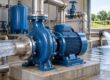
The motor and pump are integrated into a single compact unit, saving installation space.
Reliable Performance
They provide smooth and continuous water flow for industrial and commercial applications.
Low Maintenance
Simple construction and durable components reduce maintenance requirements.
Important Factors to Consider Before Choosing Self Priming Monoblock Pumps
Flow Rate Requirement
The flow rate determines how much water the pump can transfer within a specific time period. Industrial applications may require higher flow capacity depending on the operation size.
Head and Pressure Capacity
Head refers to the height at which the pump can lift water. Always choose a pump with the correct pressure capacity according to your application requirements.
Motor Power and Energy Efficiency
Energy-efficient pumps help reduce electricity consumption and operational costs. Choosing the correct motor power ensures better efficiency and long-term savings.
Material of Construction
The quality of materials used in the pump directly affects durability and performance. Corrosion-resistant materials are ideal for industrial applications and long service life.
Single Phase or Three Phase
Single-phase pumps are suitable for domestic and small commercial use, while three-phase pumps are preferred for heavy industrial operations.
Maintenance Requirements
Choose pumps with simple maintenance access and durable components to reduce downtime and repair expenses.
Types of Self Priming Monoblock Pumps
Different industries require different pump configurations based on their operational needs.
Agricultural Self Priming Pumps
Used for irrigation systems, water supply, and farming applications.
Industrial Water Transfer Pumps
Ideal for factories, process plants, and manufacturing facilities where continuous water movement is required.
Domestic Water Supply Pumps
Commonly used in residential buildings and commercial complexes for daily water supply systems.
Construction Site Pumps
Suitable for dewatering and water transfer applications at construction locations.
Common Problems and Maintenance Tips
Proper maintenance helps improve pump efficiency and extend operational life.
Dry Running
Running the pump without water can damage internal components. Always ensure proper water supply before operation.
Air Leakage in Suction Line
Air leakage may reduce suction performance and affect priming efficiency. Regular inspection is important.
Overheating
Overloading or poor ventilation can cause motor overheating. Maintain proper operating conditions.
Vibration and Noise
Improper installation or worn-out bearings can create excessive vibration and noise during operation.
Regular Cleaning and Inspection
Routine cleaning and periodic inspection help maintain smooth performance and prevent unexpected failures.
Why Choosing the Right Manufacturer Matters
The performance and reliability of Self Priming Monoblock Pumps largely depend on the quality standards followed by the manufacturer. A trusted manufacturer ensures:
- High-quality materials
- Precision engineering
- Energy-efficient performance
- Reliable testing standards
- Long operational life
- Technical support and service assistance
Choosing an experienced Self Priming Monoblock Pump Manufacturer helps industries achieve better performance and reduced maintenance costs.
Applications of Self Priming Monoblock Pumps
These pumps are widely used across multiple industries because of their efficient and dependable performance.
Common Applications Include:
Industrial water transfer
Agriculture and irrigation
Construction sites
Commercial buildings
FAQs on Self Priming Monoblock Pumps
1. What is a Self Priming Monoblock Pump?
A Self Priming Monoblock Pump is a compact pumping system designed to automatically remove air from the suction line and start pumping without manual priming. These pumps are widely used for water transfer applications in industries, agriculture, and commercial sectors.
2. How does a Self Priming Monoblock Pump work?
The pump creates a vacuum inside the casing that removes trapped air from the suction pipe and allows smooth water flow. This automatic priming process helps the pump restart efficiently after interruptions.
3. What are the advantages of Self Priming Monoblock Pumps?
These pumps offer fast priming, compact design, reliable performance, low maintenance, easy installation, and energy-efficient operation for various industrial and commercial applications.
4. Where are Self Priming Monoblock Pumps commonly used?
They are commonly used in irrigation systems, industrial water transfer, construction sites, water circulation systems, commercial buildings, and domestic water supply applications.
5. What is the difference between a Self Priming Pump and a normal Centrifugal Pump?
A normal centrifugal pump usually requires manual priming before operation, while a Self Priming Monoblock Pump can automatically remove air and restart without manual assistance.
6. How do I select the right Self Priming Monoblock Pump?
You should consider flow rate, pressure requirement, motor power, application type, operating conditions, and energy efficiency before selecting the right pump for your needs.
7. Are Self Priming Monoblock Pumps energy efficient?
Yes, modern Self Priming Monoblock Pumps are designed with energy-efficient motors and optimized hydraulic systems that help reduce electricity consumption and operational costs.
8. What maintenance is required for Self Priming Monoblock Pumps?
Regular inspection of suction lines, cleaning filters, checking seals, monitoring motor performance, and routine servicing help maintain efficient pump operation and longer lifespan.
9. Why does a Self Priming Monoblock Pump lose suction?
Loss of suction can occur due to air leakage, clogged pipes, dry running, damaged seals, or improper installation of the pump system.
10. Why should I choose a trusted Self Priming Monoblock Pump Manufacturer?
A trusted manufacturer ensures high-quality materials, reliable performance, precision engineering, energy efficiency, and dependable after-sales support for long-term industrial use.
Conclusion
Choosing the right Self Priming Monoblock Pumps is important for ensuring efficient water transfer, reliable performance, and long-term operational stability. Factors like flow capacity, motor efficiency, material quality, and maintenance requirements should always be considered before selection.
With advanced engineering and durable pump solutions, Lotus International provides reliable Self Priming Monoblock Pumps designed for industrial, agricultural, and commercial applications.