Openwell Submersible Pumps manufacturer
Lotus International is a trusted Openwell Submersible Pumps supplier offering reliable pumping solutions for domestic, agricultural, commercial, and industrial water applications. These pumps are designed for use in open wells, underground tanks, reservoirs, sumps, and other water storage sources where efficient water lifting and transfer are required.
Whether driving large-scale agricultural operations, maintaining industrial processes, or ensuring a steady domestic water supply, reliable water pumps are the backbone of modern infrastructure. Moving large volumes of water requires robust equipment, and when drawing from exposed sources like open wells, reservoirs, or ponds, standard surface pumps often fall short. This is where openwell submersible pumps step in as the ultimate reliable solution.
Uniquely engineered to function entirely underwater, these pumps eliminate priming issues and maximize hydraulic efficiency, making them an essential technology for demanding, high-volume water lifting applications.
What is an Openwell Submersible Pump?
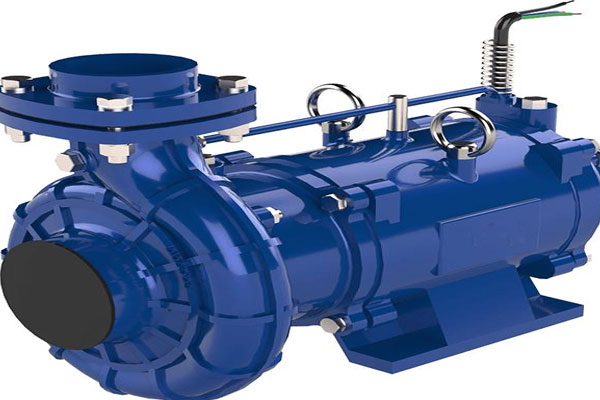
An openwell submersible pump is a specialized type of water pump designed specifically to sit directly at the bottom of an open well, underground tank, or pond.
Unlike traditional surface pumps that pull water up through a pipe, these units are designed to operate entirely underwater, with both the electric motor and the pump casing fully submerged. They function on the principle of centrifugal force, utilizing rotational energy to draw water directly into the pump and push it upward through a discharge pipe with maximum efficiency.
Key Features of Openwell Submersible Pumps
-
Modern openwell submersibles are engineered with several critical features that set them apart from standard pumping solutions:
- Compact Design: Their streamlined build is highly space-saving and makes them easy to install directly at the water source without requiring a dedicated pump house.
- Submerged Operation: Resting at the bottom of the water source ensures efficient water lifting and completely eliminates the need for manual priming.
- Corrosion-Resistant Material: Constructed from heavy-duty cast iron or stainless steel, these pumps are built to withstand constant immersion in water without rusting or degrading.
- Minimal Noise and Vibration: Because they operate deep underwater, the surrounding water naturally dampens sound and absorbs movement, resulting in practically silent, vibration-free operation.
- Durability and Low Maintenance: The hermetically sealed design protects vital internal components from dust, debris, and external weather conditions.
How Openwell Submersible Pumps Work
The secret to their effectiveness lies in their secure, waterproof construction and hydraulic mechanics. The pump motor is completely housed in a hermetically sealed casing, preventing water from breaching the electrical components and causing short circuits.
When powered on, the motor spins an internal component called the impeller. This creates a powerful centrifugal force mechanism. As the impeller rotates at high speeds, it creates a vacuum that draws water into the pump’s intake. The kinetic energy from the spinning blades then rapidly pushes the water outward and forces it up through the discharge pipe to the surface
Applications of Openwell Submersible Pumps
Because of their versatile and powerful design, openwell submersible pumps are utilized across a wide variety of sectors:
- Agricultural Irrigation: Essential for moving large volumes of water from farm ponds, canals, or open wells to irrigate crops and fields.
- Domestic Water Supply: Ideal for lifting water from underground residential tanks or boreholes to overhead storage tanks in homes and apartment complexes.
- Commercial and Industrial Water Lifting: Used in farms, factories, and industrial plants to manage heavy-duty cooling, cleaning, and water transfer tasks.
- Drainage: Highly effective for pumping floodwater out of construction pits, basements, or overflowing wells.
Advantages of Openwell Submersible Pumps
- Investing in an openwell submersible offers distinct benefits over traditional surface pumping methods:
- Energy Efficiency: Because they push water rather than relying on suction to pull it, they require much less energy to move the same volume of water, offering low power consumption for longer periods.
- Space-Saving Design: They free up valuable surface-level real estate, making them ideal for properties or facilities with limited space.
- Minimal Maintenance: Protected by the water they sit in, these pumps run cooler and are shielded from external damage, meaning they are designed to last longer with less maintenance.
- Continuous Operation: Their excellent heat dissipation—thanks to being surrounded by water—makes them great for long hours of continuous, uninterrupted water lifting.
Choosing the Right Openwell Submersible Pump
To get the most out of your investment, it is crucial to select the right pump for your specific needs by considering the following factors:
- Flow Rate and Head Requirement: Calculate the volume of water you need moved per hour (flow rate) and the total vertical distance the water needs to travel from the pump to the discharge point (head).
- Motor Power: Identify the right horsepower (HP) or kilowatt (kW) rating needed for your specific tasks to ensure the pump doesn’t underperform or waste electricity by being overpowered.
- Material Construction: Select a pump with the right material for your water source. For standard water, cast iron is often sufficient, but if you are dealing with slightly corrosive or hard water, stainless steel components are highly recommended for longevity.
FAQs
An openwell submersible pump is used to lift and transfer water from open wells, underground tanks, reservoirs, ponds, and other water sources for domestic, agricultural, commercial, and industrial applications.
Choose a pump based on the required water flow, total head, installation depth, motor HP, power supply, pipe size, and daily operating requirements.
Yes. Openwell submersible pumps are widely used for agricultural irrigation, farm water transfer, crop watering, and lifting water from open wells, ponds, and storage tanks.
Yes. A properly selected openwell submersible pump can transfer water from an underground tank or open well to an overhead water tank efficiently.
An openwell submersible pump is generally designed for open wells, tanks, and reservoirs, while a borewell submersible pump has a narrow design suitable for installation inside a borewell casing.
The required HP depends on the water quantity, total pumping head, pipe length, discharge requirement, and application. Pump selection should be based on actual site conditions rather than HP alone.
Yes. Depending on the pump range and application, openwell submersible pumps may be available in single-phase and three-phase configurations for domestic, agricultural, and commercial use.
Lotus International supplies openwell submersible pumps in Ahmedabad for various water lifting and transfer requirements. Buyers can discuss their required head, discharge, HP, and application before selecting a suitable model.
Share the required flow rate, total head, water source, motor HP if known, power supply, pipe size, operating hours, and application to receive a more suitable pump recommendation and quotation.
Lotus International offers pump solutions for domestic, agricultural, commercial, and industrial water applications and can assist customers in selecting an openwell submersible pump according to their operating requirements.
Conclusion
Openwell submersible pumps represent a significant leap in water transfer technology, offering a brilliant mix of efficiency, quiet operation, and rugged durability. Whether you are looking to optimize agricultural irrigation, manage an industrial facility, or simply ensure a reliable water supply for your home, these pumps provide an unmatched, space-saving solution. By investing in reliable openwell submersible technology, you are choosing a greener, more sustainable, and cost-effective future for your water management needs.